Photos: Städtische Galerie, Villingen-Schwenningen, Germany
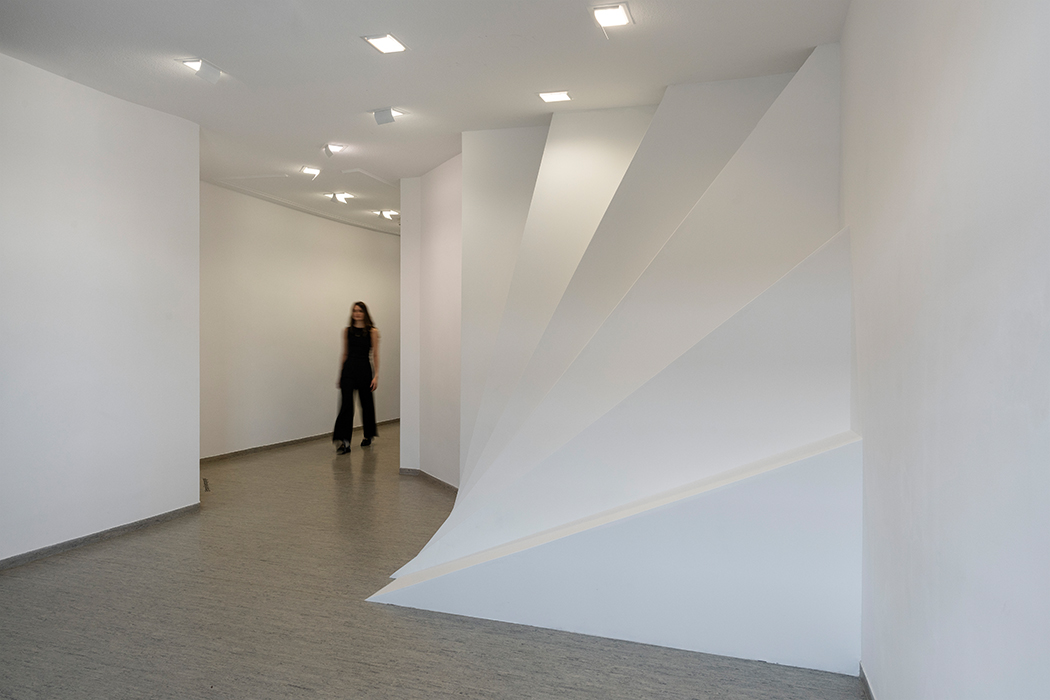
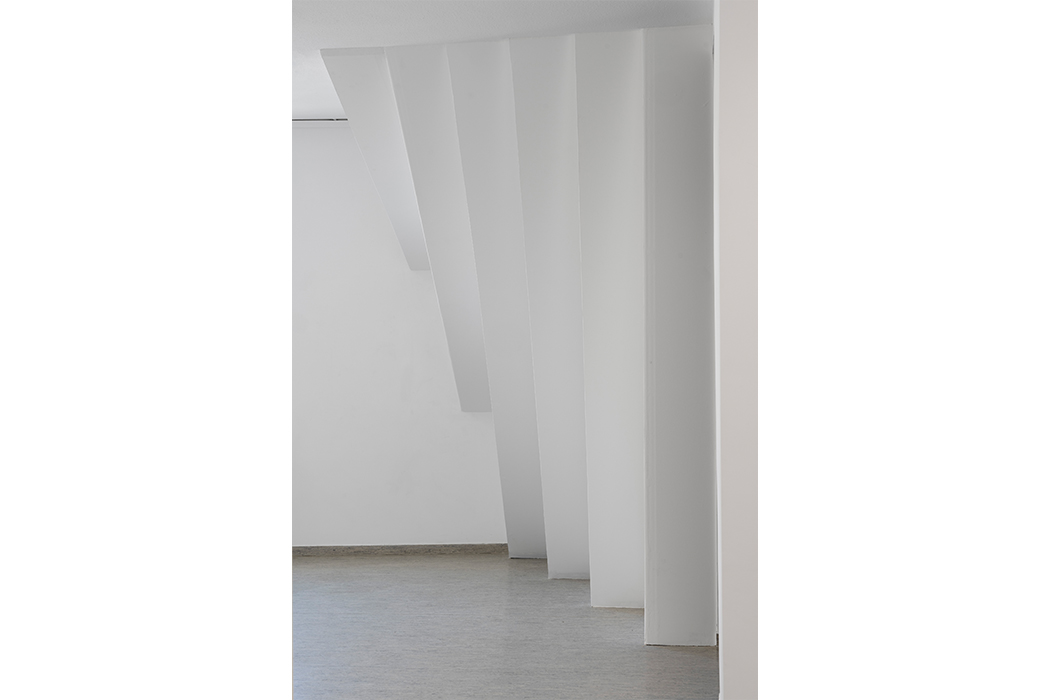
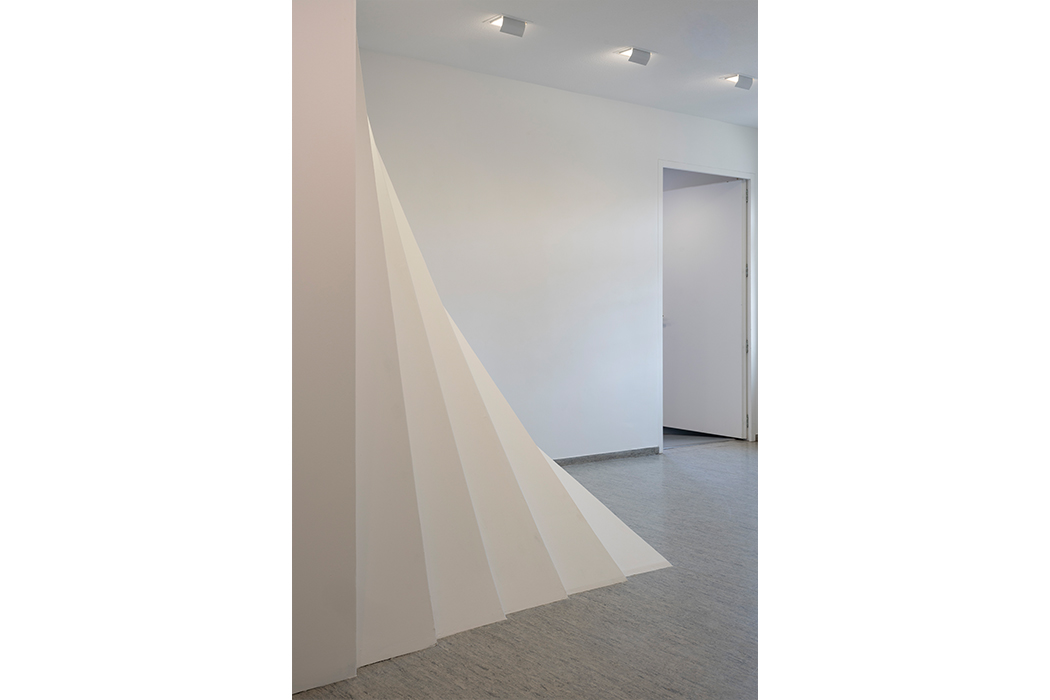
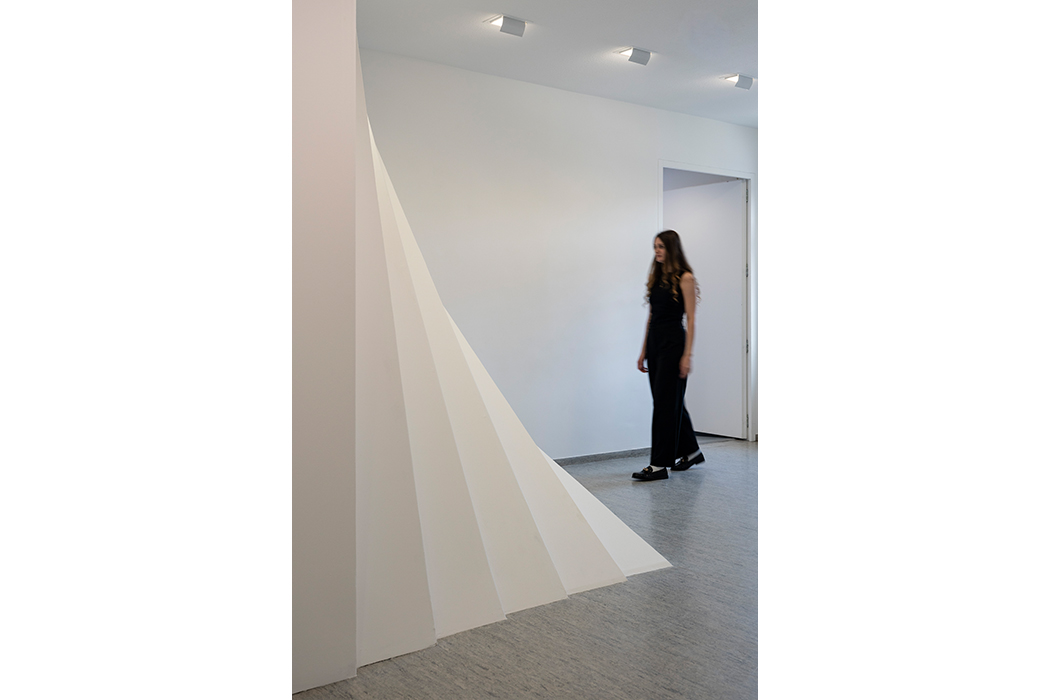
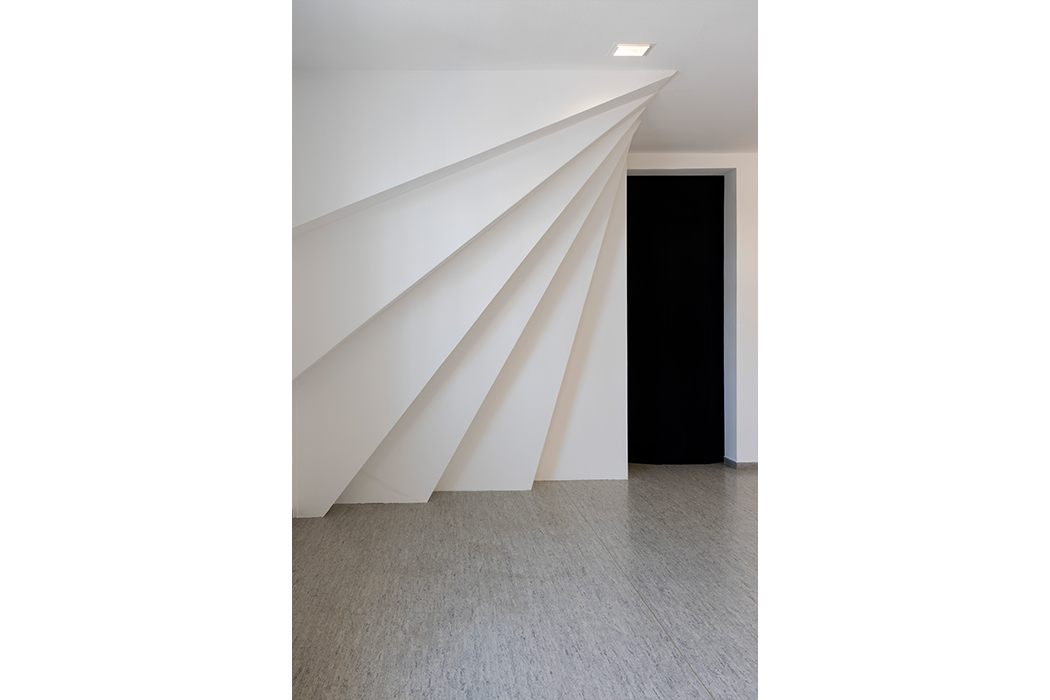
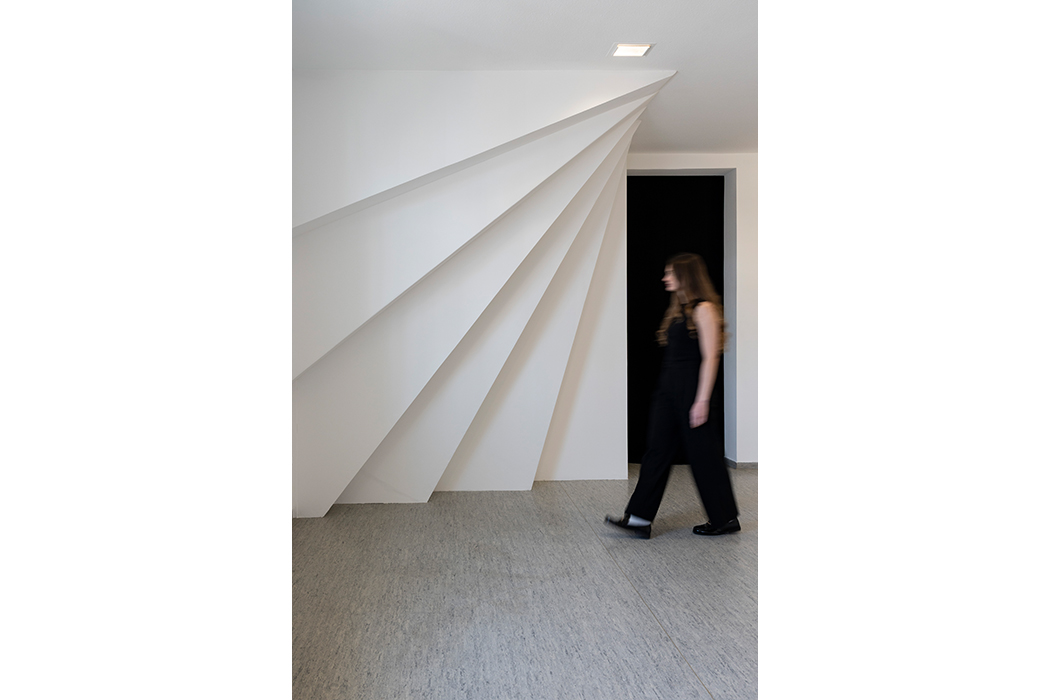
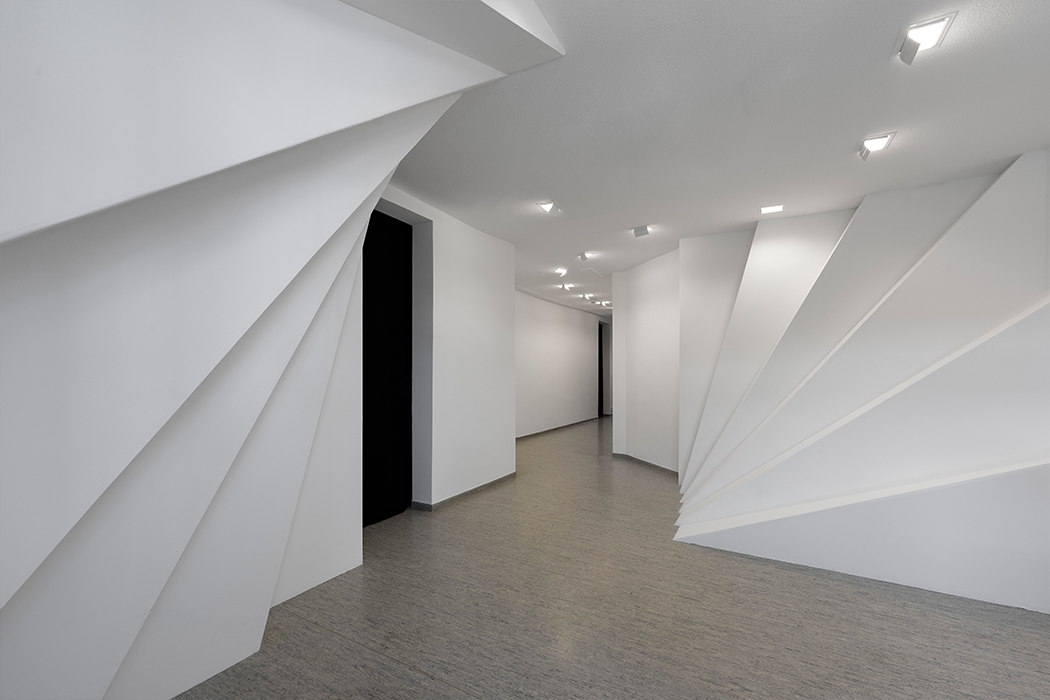
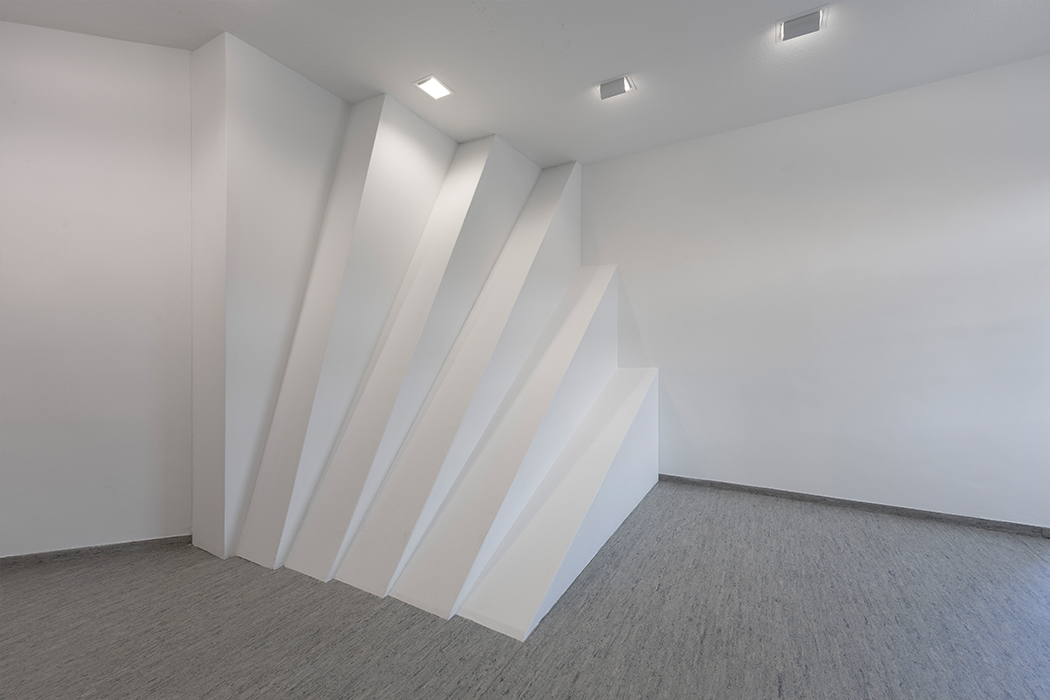
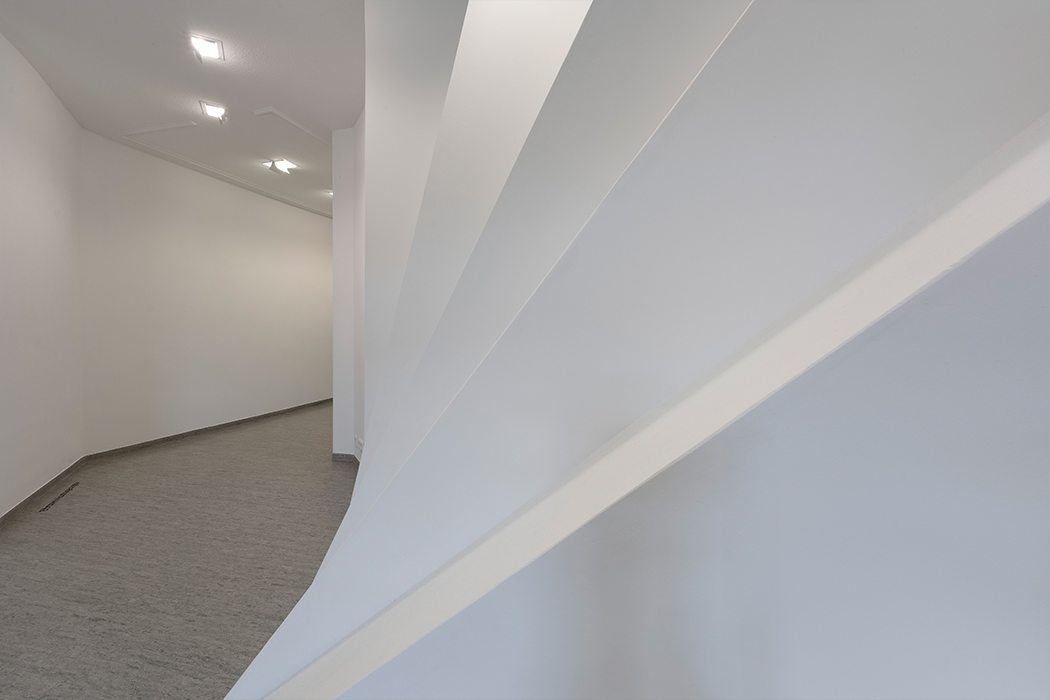
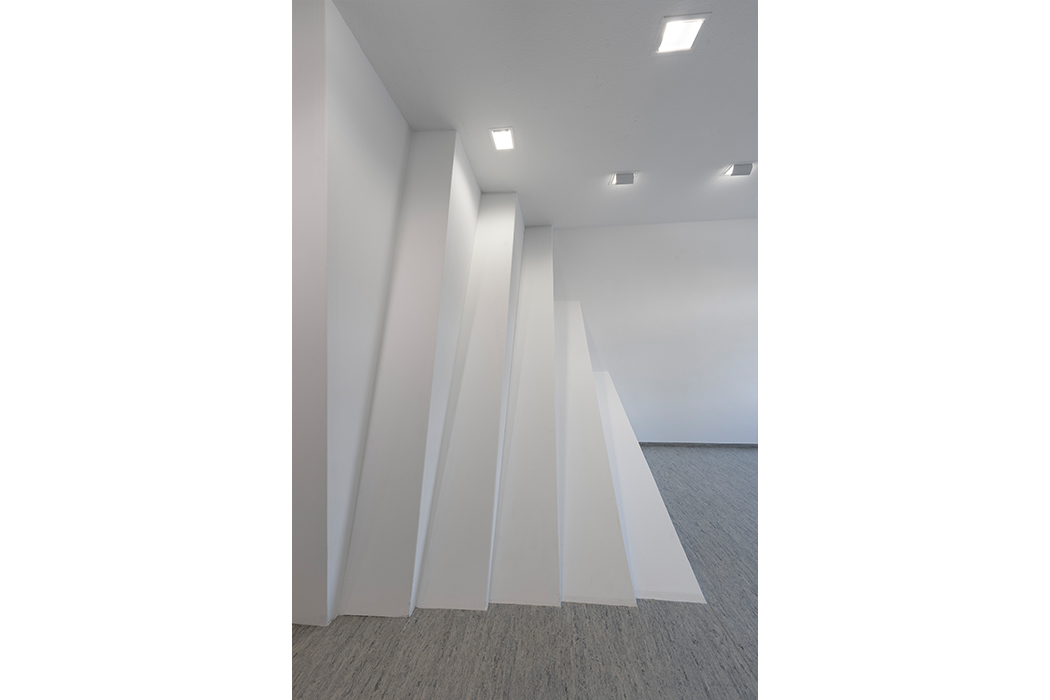
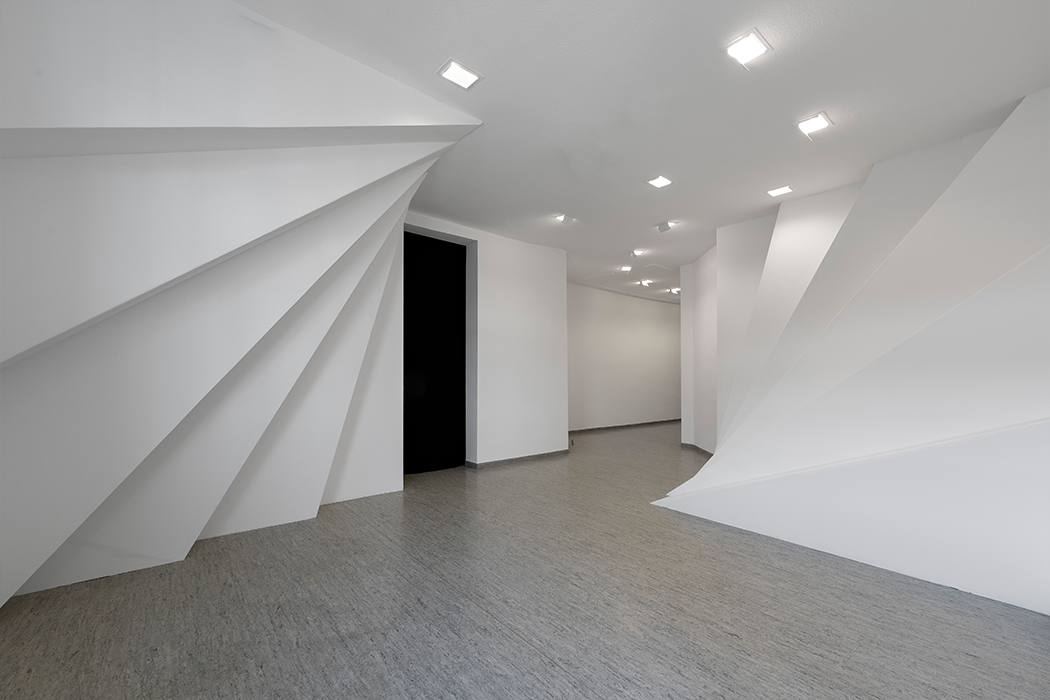
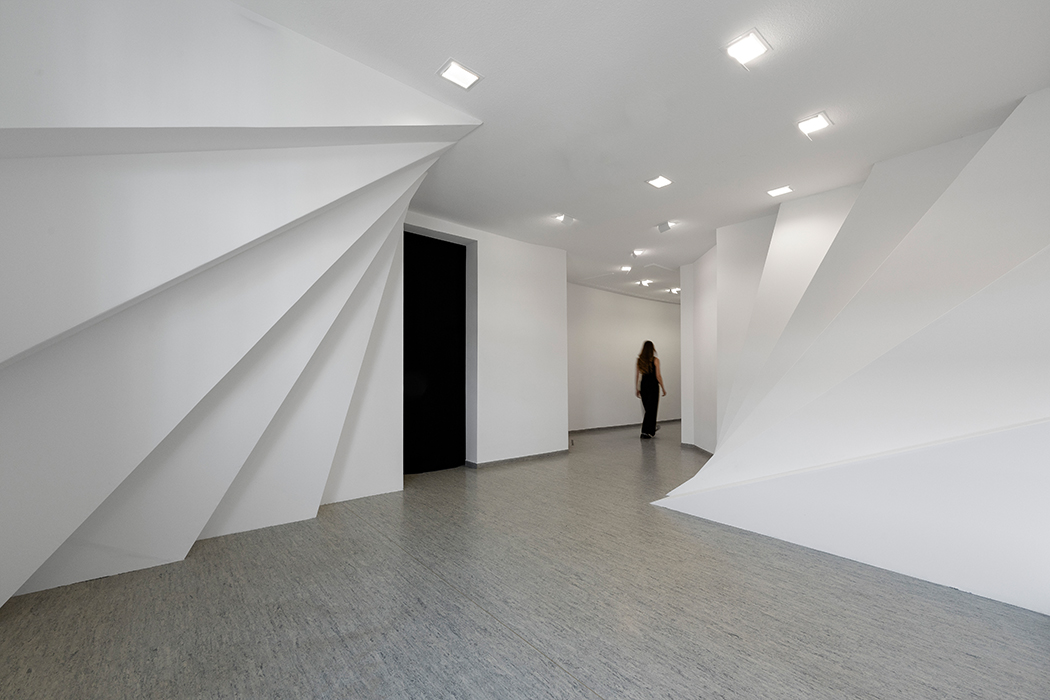
A narrow corridor in the museum transforms into a dual, ambivalent passageway. Two opposing walls wind through the space in a spiral. On one side, the wall folds upward, its steps leading to the ceiling; on the other side, this movement runs in the opposite direction. The surfaces tilt sideways, continue to twist, and sink into the floor. These movements create a cave-like confinement, a passageway with a dual direction, twofold. Right and left, up and down lose their normative stability. The space guides the visitor’s body, mentally shifting it in various directions and against gravity. The white walls of a museum are normally constructed to be permanently stable. They can be experienced as “invisible.” In this sense, the artwork here disappears as an object within the architectural structure itself. Victor Turner describes liminality as a state of structural invisibility, ambiguity, and neutrality*. Yet space cannot be perceived or grasped independently of the sensory body. The transition or passage as a physical phenomenon ultimately becomes an experience of one’s own body and of fluctuating equilibrium. Can perception itself not distort and transform time and space?